When I was growing up, macaroni tuna salad was a simple affair: a pound of elbow macaroni, probably a store brand, a can of tuna, ditto, a cup of peas, a minced onion, and lots of gloppy mayonnaise to extend that can of tuna as far as it could go. We loved it, and for a big gathering, we'd find a double batch waiting for us! But there was never enough tuna in the salad!
Yesterday a macaroni salad, today a pasta salad
Only one or two in my extended family like a summer salad with a lot of mayonnaise, potato salad being the exception, but even then, not too much. More often, we use a vinaigrette style dressing on our grown-up "pasta" salads, and lots of vegetables tossed in for flavor and color, and, most probably to lessen the carb content.
A word about the tuna
But I wanted a nod to my childhood flavor memories, with a fix or two, of course. First of all, I doubled the amount of tuna, and I used all the oil in the can as well since it adds so much flavor. I used a sustainably fished, line-caught tuna that is tested for mercury. Even so, I know it is not mercury free, so this is something I'll serve only now and then. All of this information should be on your can or jar. These little steps are important.
Now the pasta, or rather, macaroni
So, the macaroni. Mom always used regular elbows made of white flour. I swapped for some whole wheat here, got to justify those carbs, but you could also use gluten free, especially the lovely lentil and brown rice varieties. You can use sea shells, bow ties, penne, any shape you like that is not too small.
A nod to the mayo
There's some mayo in my version, but not a ton and it is thinned with the tuna juice and some olive oil and vinegar as well. The oil content of the tuna will vary, so you will have to use your own judgement when adding the additional olive oil. I added the sriracha and Dijon to liven things up, and this can be adjusted to your own tastes as well, or even omitted.
My favorite trick
A lot of people have trouble with raw onions in a salad. To make this a bit more digestible, I used the milder, sweeter shallots and sautéed them lightly first to remove some of the bite and add some interest. This made a big difference in flavor. Have you noticed that shallots seem to be getting bigger? I had one the other day from a local farm that was the size of a small onion!
Let's top it off
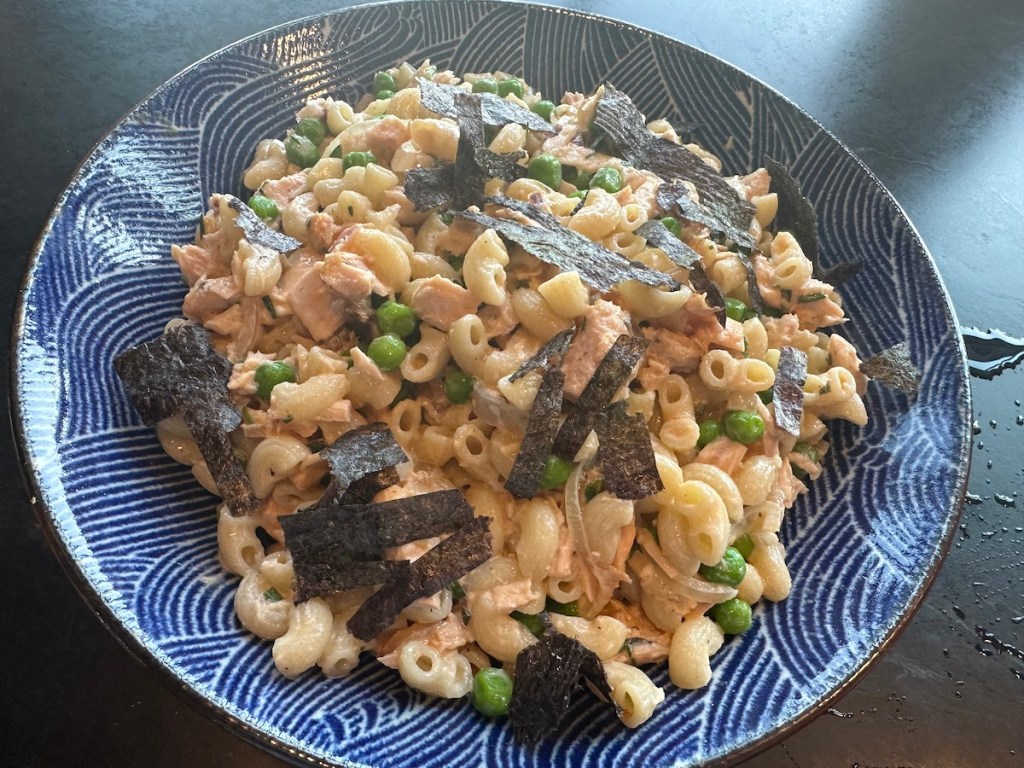
The final topping, a little toasted seaweed, which we all loved. It was a nod to my granddaughter, who loves to snack on nori sheets I use for sushi rolls, so they are usually in the pantry.
A vegan version with a taste of the sea
To make this vegan, omit the tuna and triple up on the dried seaweed, mixing it all in. You can also find the dried seaweed in little shaker bottles, but it is pretty easy to quickly toast and shred or mince, and you get the taste of the sea.
This makes enough for a large gathering, and can be halved if you like. The leftovers? Superb!
Macaroni and Tuna Salad My Way
- 1 lb. whole wheat elbow macaroni
- 2 really large shallots, sliced into thin rings
- ¼ cup extra virgin olive oil, divided
- 2 cans/jars olive oil packed, safe-catch tuna, plus juice
- ¼ cup mayonnaise or vegan mayonnaise
- 1 tbsp. sriracha sauce
- 1 heaping tbsp. Dijon mustard
- 2 tbsp. white wine vinegar
- 1 cup, or more, thawed frozen peas (use fresh if in season)
- A sheet or two of toasted nori sushi sheets or other dried seaweed
Put the macaroni on to boil in salted water and cook according to package directions. Drain and let come to room temperature.
In a small saucepan, sauté the shallots in a tablespoon of the olive oil. You want them soft and tender, but not browned. Place in a large mixing bowl.
To the bowl, add the juice from the tuna cans or jars, the rest of the olive oil, mayonnaise, sriracha, Dijon, and vinegar. Mix well, then toss in the macaroni and peas, add some salt and pepper, and taste. Once combined, gently break up the tuna and stir that in gently. Taste again, and adjust the seasoning. Top with the toasted, dried nori. Serves a boatload!
Cooking Note:
To toast the nori, grab the sheet with metal tongs and hold over your gas flame or electric burner, turning quickly. It happens fast, we're talking a second or two here. On my Aga, I place it on the simmering plate for a couple of seconds.
© Copyright 2023– or current year, The New Vintage Kitchen. Dorothy Grover-Read. Unattributed use of this material is strictly prohibited. Reposting and links may be used, provided that credit is given to The New Vintage Kitchen, with active link and direction to this original post.
The New Vintage Kitchen does not accept ads or payment for mention of products or businesses.
Supporter of: Slow Food Fair Trade USA Northeast Organic Farmers Association EcoWatch Let's Save Our Planet No Kid Hungry Hunger Free Vermont Environmental Working Group World Central Kitchen Sustainable America







No comments:
Post a Comment